Problem
Brilliant Cities has many offerings and users, making organization a big deal. Users cannot track their own progress through Brilliant Cities programs, and there is no way for program managers to connect individually. Program managers can’t see the progress of children within their hub.
Solution
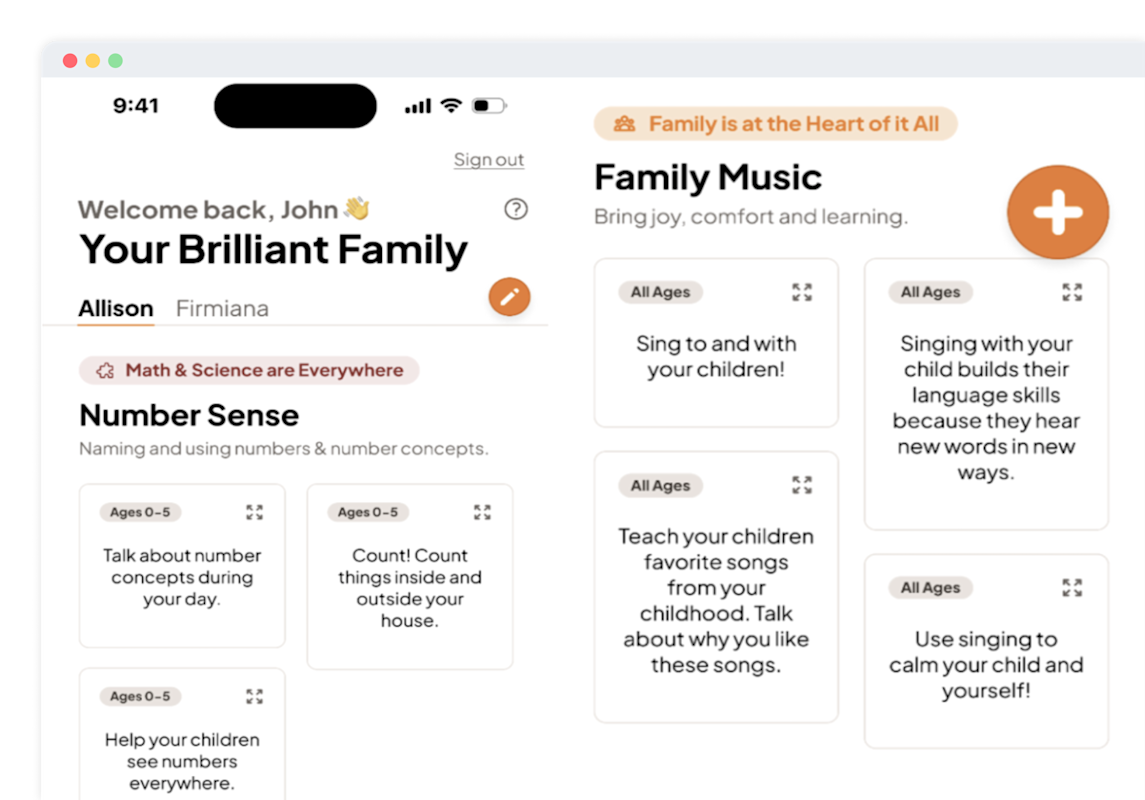
Working with Brilliant Cities’ inhouse children’s psychologist, we built a phone-accessible website that gives families healthy habits to track with their child. These habits were curated and hand-picked, aimed at allowing Brilliant Cities families to grow in a variety of ways. Program managers are free to edit these habits. Further, the app was developed to be heavily extensible, bending to whatever direction Brilliant Cities would like to pursue for further family development.
Design
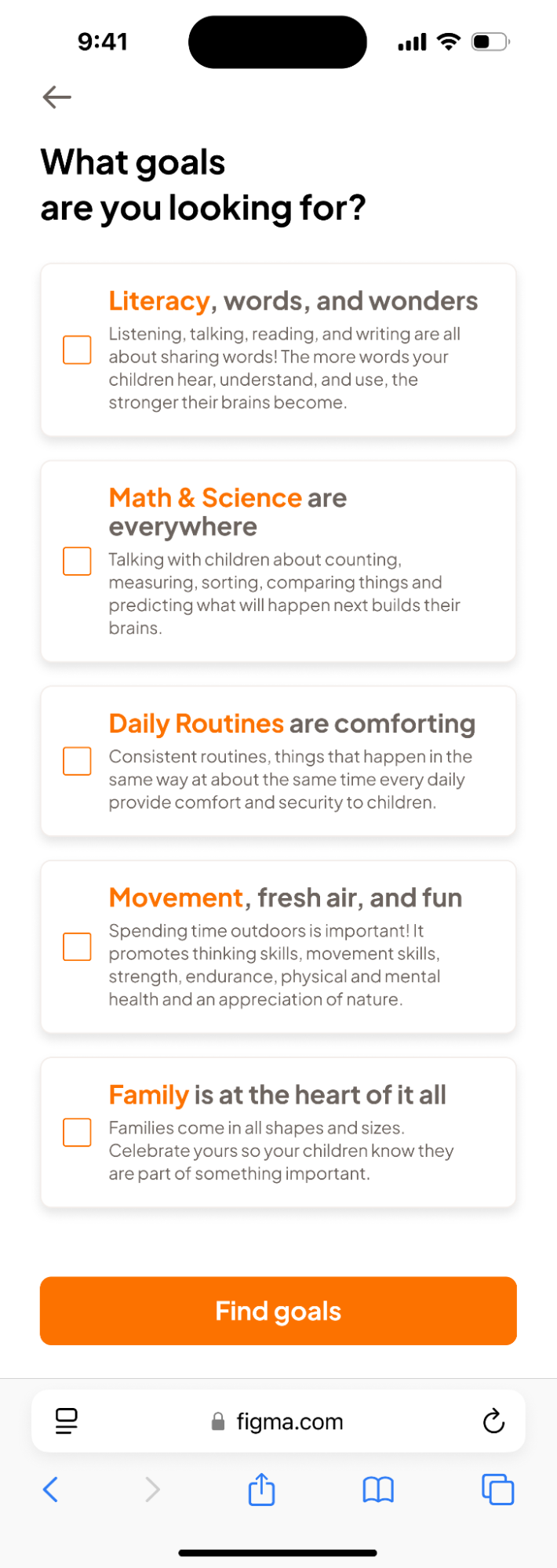
The main user groups for this project were program managers and families. Many Brilliant Cities families aren’t typical, meaning that a main consideration was making sure all family types felt welcomed–this also meant making the app warm and inviting. We also had a lot of different types of habits to provide families with. This meant thinking critically about the organization and fragmentation of habit types, making all of them discoverable.
We focused heavily on making the app mobile-first, as we expected most users to quickly check the website. With this considered, we also made sure that you could use this on desktop to be accessible to all.
Tech Stack
The Kids Success App is a full-stack web application that uses React on the frontend with Chakra UI for component-based styling. The backend is built with ExpressJS on Node.js, and the application stores data in Firebase Firestore, a NoSQL cloud database. Across both the client and server, TypeScript enables type-safe development, and Firebase Auth provides secure user authentication.
Features
Adding Habits
To support families in engaging consistently with the platform, we focused on making the process of adding habits clear and approachable. The habit selection flow was designed with a user-first mindset, prioritizing straightforward navigation and quick access to relevant information so families can easily find habits that align with their goals. Recognizing that many users may be unfamiliar with the platform, the experience emphasizes clarity over complexity, presenting essential context up front and minimizing unnecessary steps. This design choice helps lower the barrier to participation while reinforcing the project’s broader goal of enabling families to track progress and build healthy routines together.
Habit Dashboard
The habit dashboard was designed to give families a centralized space to manage and monitor habits for each child. From this dashboard, families can easily view their selected habits and access the steps and guidance needed to pursue them in a healthy, developmentally appropriate way. By keeping progress and supporting information in one place, the dashboard helps families stay organized and engaged, reinforcing the project’s broader goal of making habit-building approachable while improving visibility into a child’s growth over time.
Admin Dashboard
The admin dashboard provides program managers with direct control over the habits available on the platform, allowing them to add, update, or remove habits as program needs evolve. This flexibility ensures that content remains relevant and aligned with Brilliant Cities’ goals, while supporting the organization’s ability to adapt offerings for different families and hubs. By giving administrators clear oversight and management tools, the dashboard contributes to the broader objective of improving organization, visibility, and long-term scalability across Brilliant Cities’ programs.